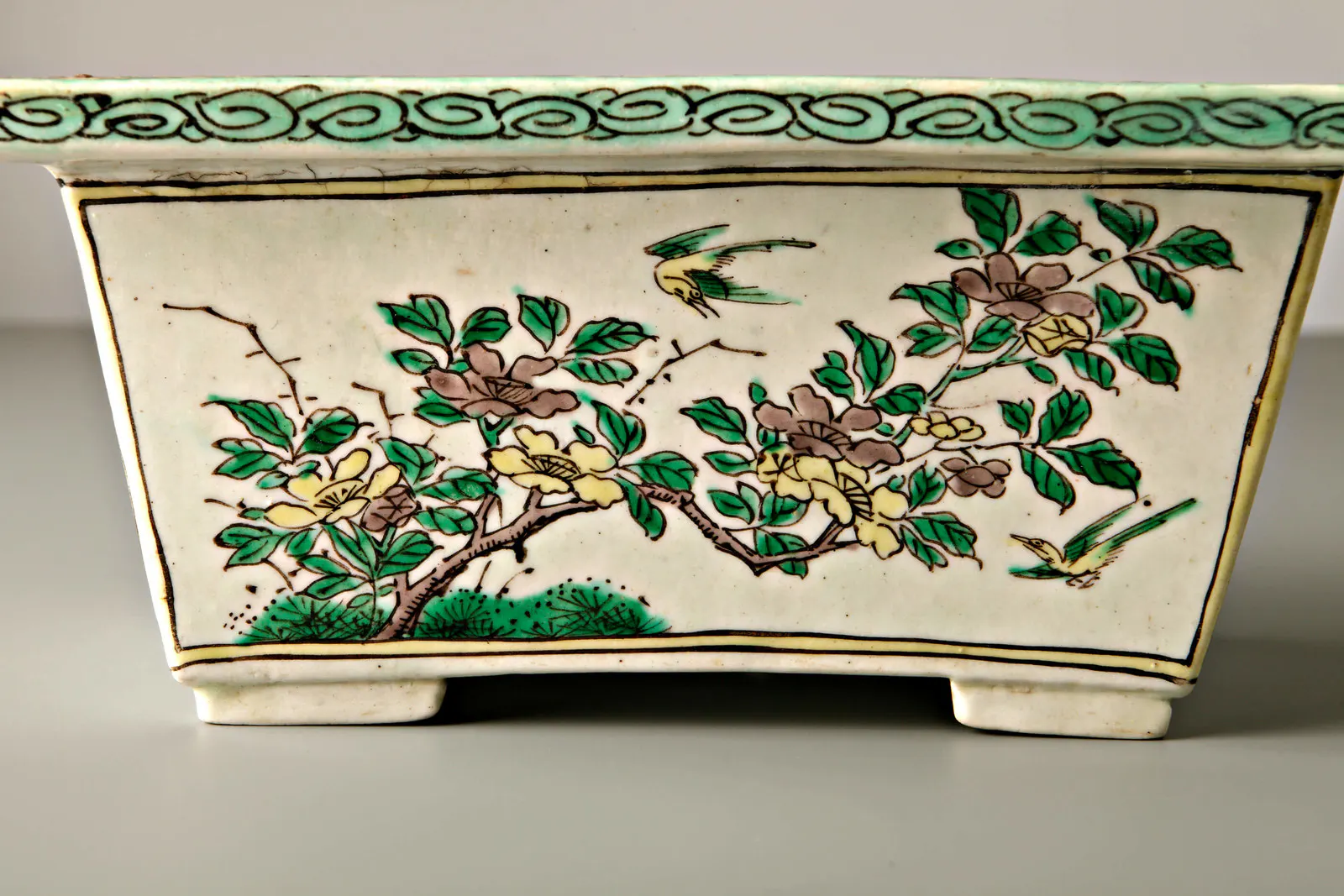
This rectangular jardinière with aubergine, green and yellow enamels enamels on a white ground, stands on four low corner feet. It has a broad flat rim, decorated op top with meandering flowers and branches. On the side of the rim is a swirling pattern in dark brown on a light green background. The sides, which taper slightly, are decorated with various scenes. The front panel is decorated with a flowering prunus blossom branch, which sprouts from a grassy knole, with two flying birds. The opposite side has peony branches with yellow and aubergine blooms, surrounded by hovering butterflies and a cricket. The smaller panels both show a selection of the ‘hundred treasures’. All the panels have a narrow yellow border with a thin brown line either side. The inside and underside of the flowerpot are unglazed, with a small draining hole pierced into the base.
Plum blossom is known as the first among flowers and is very much admired by the Chinese. From the Song Dynasty onwards it becomes a much used literary motif, with a great symbolic value. On this Jardinière the blossom is shown fully opened, and as such identified with the beginning of spring, as it is the first tree to blossom after winter. The two birds are also emblematic of spring. The opposite panel shows Peonies, butterflies and crickets which all symbols of summer. The smaller panels show collections of objects known collectively as the Hundred Antiquities or Hundred Treasures, a hundred really meaning many treasures. It is a group of emblematic forms that include antiquities, scholar’s objects, representations of sacrificial vessels and three-dimensional decorative arts of all types. This motif becomes popular from the seventeenth century onwards and is full of auspicious symbolism.
Small flowerpots such as this one, would have been used for growing plants indoors. Lower flatter pots, without drainage holes, were used for the cultivation of narcissus flowers. Larger jardinières were for on a balcony or veranda. Flower appreciation, gardening and flower arranging were pleasurable pastimes for the Chinese literati and several treatise were published on the subject during the Ming Dynasty.